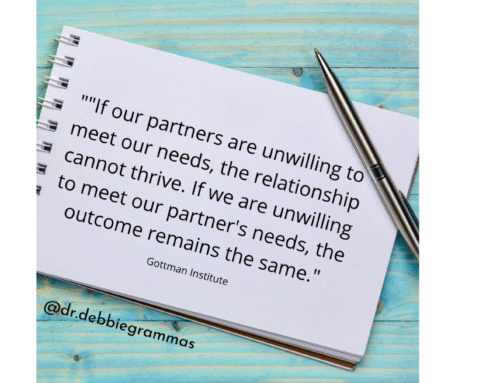
Are you really connecting with your loved ones? Many of us like to believe we are present and engaged in our relationships, but sometimes we need to pause and ask ourselves: are we fooling ourselves?
Here is an example that stood out in my mind. We went out to a beautiful steakhouse for dinner. As we were enjoying our meal, I noticed a young couple at the table next to us. What stood out wasn’t their food or their conversation—it was the fact that one of them was staring at their phone. In this lovely setting, presumably meant for quality time and connecting. The phone had become the third wheel at their table.
If you are on your phone, you are not with your partner or friend. You may be physically present, but emotionally and mentally, you’re somewhere else. That couple’s experience could have been very different if the phone had been on vibrate or tucked away altogether. They weren’t connecting in a way that they could have.
I am also guilty of not connecting with my family in ways I could be. There was a time I was my kids and I noticed we were doing the same thing. Each of us were each on our phones in the family room. No one was talking. No one was really present. We were all checking out. I caught myself in that moment and made a conscious choice to put down my phone and start a conversation with them. And just like that, we were connecting again. These moments are precious and finite, and it’s too easy to miss them if we’re lost in our screens.
Ground rules for connecting
Technology isn’t inherently bad. In fact, it can be a powerful tool for connecting when we use it with intention. But left unchecked, it can quietly erode the quality of our relationships. Here are a few simple but powerful rules to consider implementing in your own life:
No phones at the dinner table
We are conditioned—just like Pavlov’s dogs—to respond immediately when our phone pings or buzzes. That simple notification can pull us out of a deep conversation or meaningful moment. Consider placing phones on vibrate or turning them off completely during meals. Make shared meals a sacred time for face-to-face connection.
No phones in the bedroom
Bringing screens into bed affects both your sleep and your relationships. The blue light emitted from devices suppresses melatonin production, making it harder to fall and stay asleep. More importantly, if you’re tuned into a device, you’re less available for connection—whether that’s conversation, cuddling, or intimacy—with your partner. Those moments before sleep are valuable for “pillow talk” and emotional bonding.
It’s not just adults who are impacted
On the flight home, I read an article that discussed the impact of parental phone use on infants. Babies whose caregivers are frequently on their phones may develop shorter attention spans. Beyond that, when a caregiver is not engaging, children are at greater risk of accidents and may form weaker emotional attachments. Your presence matters deeply to your child’s safety and development.
Voice is better for connecting than text
In a world of instant messaging, it’s easy to rely on texts for everything—but texts lack tone, nuance, and warmth. I’ve seen countless clients fall into text message miscommunication loops, where a word or punctuation mark is misinterpreted, leading to unnecessary conflict. Even in couples counseling, a single phrase sent over text can spiral into misunderstanding. A phone call allows for real-time clarification, tone of voice, and genuine connection.
Don’t expect people to reply immediately
In our hyper-connected world, we expect an immediate response. But it’s unrealistic—and unhealthy—to assume our partner or friend should be available 24/7. People have work, responsibilities, and moments when they need to focus or recharge. Delaying a response does not mean disinterest or rejection. Practicing patience and understanding can go a long way in fostering trust and respect.
Take time to reflect on how you are connecting
Technology isn’t going anywhere—but how we interact with it can change. Take an honest look at your own habits. Is your phone getting more of your attention than the people in front of you? Are you missing out on opportunities for connecting in a deeper, more meaningful way?
If you’re finding it difficult to create healthy boundaries around phone use, you’re not alone. Many of us struggle with this in a world where we’re expected to be “always on.” The first step is awareness. The second is action.
Start small. Try one new rule this week. Maybe it’s turning your phone off during dinner, or leaving it outside the bedroom. Then build from there. Invite your family or partner to join you. These small changes can lead to big shifts in how connected you feel.
And if this is something you want to explore more deeply—especially in your relationships—I’m here to help. Feel free to reach out at 713-304-6554. Let’s work together to strengthen the relationships that matter most to you.
Take care,
Debbie