Being able to apologize is often misunderstood. Many see it as a weakness—a sign of giving in or admitting defeat. But in reality, nothing could be farther from the truth. Apologizing is one of the clearest signs of emotional strength and maturity. It takes courage to own our mistakes, especially when tensions are high or emotions are raw. In my work with individuals and couples, one of the most common struggles I see is the inability—or unwillingness—to say, “I’m sorry.”
Let’s be honest: when we’re in the middle of an argument, we all believe we’re right. That’s what fuels the argument in the first place. We feel our perspective is the obvious one. We think, “Why can’t they see it my way?” But what we often forget is that our partner feels exactly the same way. They’re convinced their perspective is valid—and often very different from our own.
Why do we see things so differently?
There are many reasons, but one of the most important is that our beliefs, emotions, and reactions are shaped by our unique life experiences. Even two siblings who grow up in the same household will have different perceptions of their upbringing. Now consider that your partner likely grew up in a completely different home, with a different set of values, expectations, communication styles, ways to apologize and emotional norms. Often, we carry those early lessons into our adult relationships, unconsciously believing that our family’s way is the “right” way.
But here’s the truth: there isn’t just one “right” way to see or do things. There are many. And they can all be valid.
Gender socialization also plays a role in how we experience and express emotions. From an early age, boys and girls are often taught different emotional rules. Culturally, boys are more often given permission to express anger and aggression, while girls are encouraged to show vulnerability—like sadness, anxiety, or fear. This conditioning shapes how we deal with conflict as adults. Add to that the fact that male and female brains are wired differently, and it’s no surprise that partners often end up speaking completely different emotional languages during an argument.
Why is it hard to apologize?
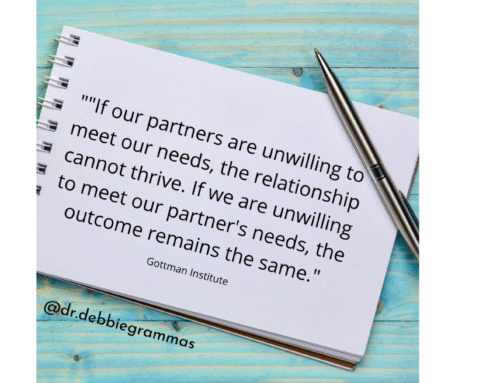
One of the most important steps in repairing conflict is learning to respect and validate our partner’s feelings—even if we don’t fully understand or agree with them. This often means being willing to apologize for something we said or did that caused hurt. It doesn’t mean we’re admitting we were 100% wrong or that we’re solely to blame. It means we’re recognizing that our words or actions had an impact, and we care enough about the relationship to take responsibility for that impact.
Unfortunately, many couples fall into a pattern of silence after a disagreement. Sometimes they go days without speaking, except for the bare minimum needed to get through the day. This kind of emotional distance can be incredibly painful. Living under the same roof while emotionally disconnected is lonely and draining. And oftentimes, the ability to apologize in a simple, heartfelt manner can break the ice and start the healing process.
Apologizing is an emotional risk—it makes us vulnerable. But vulnerability is essential to intimacy. When we apologize, we’re not just saying “I was wrong.” We’re saying, “I value you. I care about how you feel. I want to reconnect.” That takes strength. And more often than not, once one person makes the first move, the other follows. It’s not guaranteed, of course, but it creates a space for mutual healing and resolution.
It’s important to remember that conflict in a relationship is rarely one-sided. Both partners contribute in some way, even if it’s just through tone, timing, or misunderstanding. I always tell my clients: if one person wins an argument, you both lose. Why? Because the so-called “loser” often walks away feeling invalidated and resentful. Resentment builds walls, not bridges. And relationships thrive on connection, not competition.
The healthiest relationships aren’t those without conflict—they’re the ones where both partners are willing to take responsibility for their part and work toward resolution together. The first step is to apologize in a genuine way.
Tips to apologize in a simple effective, manner
Be specific
Instead of a vague “I’m sorry,” say what you’re sorry for. For example, “I’m sorry I dismissed your opinion during our conversation. I can see how that hurt you.”
Acknowledge the impact
Recognize how your words or actions affected your partner. This helps them feel seen and heard.
Avoid excuses
Explaining your behavior can be helpful, but don’t let it become justification that undermines the apology.
Apologize sincerely
A heartfelt apology opens the door to healing. A forced one closes it.
In the end, being able to say “I’m sorry” is not a sign of weakness—it’s a sign of strength, empathy, and emotional intelligence. It says you care more about the relationship than being right.
So the next time you find yourself in conflict, ask yourself: would a sincere apology help bring us closer together? If the answer is yes, take the risk. Say the words. You might be surprised at how powerful they are.
If you need help resolving conflict in your relationship give me a call at 713-304-6554.
Take care,
Debbie