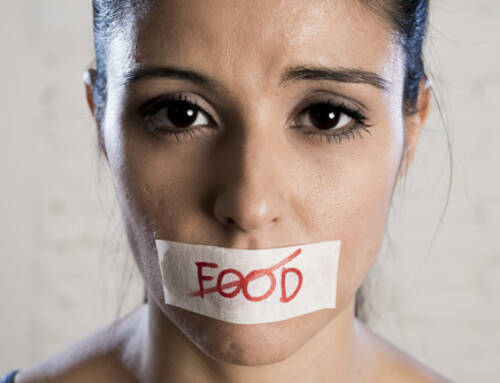
This upcoming week is National Eating Disorder Awareness Week, thus I felt that should be the focus of today’s blog. The purpose of this week is to inform the public about the impact of eating disorders and to provide hope and support for those who are struggling.
Since COVID people are struggling to an even greater extent with their mental health. According to the National Eating Disorders Association (NEDA), there has been a 107% increase in people reaching out to their helpline: online chat, phone or text 1-800-931-2237, for crisis hotline text ‘NEDA’ TO 741741.
Statistics on eating disorders (NEDA)
Almost 29% of Americans will receive a diagnosis of an eating disorder at some point in their life
It has one of the highest death rates of any mental disorder. They say that someone dies of it every 52 minutes.
Warning signs for eating disorder awareness:
Noticing that someone has lost a lot of weight or are controlling and restricting their food intake
They are preoccupied with weight and are obsessing about fat, calories, etc.
Removing certain types of food from their diet such as carbohydrates or fats.
Rituals around food, or not wanting to eat around other people
Overly concerned about weight and shape
Constant checking in the mirror
GI issues
Stopping of periods
Dizziness upon standing or fainting
Difficulty with sleep and concentration
Dental issues such as erosion of enamel and increased number of cavities (vomiting)
Cuts and calluses on the fingers (due to inducing vomiting)
Common Eating Disorders
Anorexia Nervosa
According to the Diagnostic and Statistical Manual of Mental Disorders fifth edition (DSM5) the person needs to have a weight that is significantly less that what is normal for their age and developmental level. The classic symptom is an intense fear of getting fat or gaining weight. They base their self worth on their weight, and their body image is distorted. The person does not recognize the seriousness of their weight loss.
There are several subtypes and levels of severity with this disorder.
Bulimia Nervosa
With this disorder the person eats large amounts of food (much more that what is considered normal), over a discreet time period (ex. 2 hours). The person does not feel as if they are in control of their eating. In order to purge the excess calories the person gets rid of their food by vomiting, laxatives, excessive exercise, or medications.
There are also several subtypes and levels of severity with this disorder.
Binge Eating Disorder
As in bulimia nervosa, the person eats a large amount of food with the feelings of lack of control. They eat even if they are not hungry, to the point of being uncomfortable. They often feel a sense of shame or guilt afterwards. The severity depends on how often the person engages in the behavior.
These are the three most common conditions noted for eating disorder awareness.
Otherwise Specified Feeding or Eating Disorder (OSFED)
This would encompass a wide variety of the symptoms listed above for anorexia, bulimia and binge eating. They would have some of these symptoms. Yet, the person would not meet full criteria to receive one of the above diagnoses. Thus it would look very different from person to person.
Avoidant Restrictive Food Intake Disorder (ARFID)
With this eating disorder there is a large amount of weight loss. The person is very picky with their food and only eats a few things. The person may be afraid that they will choke or vomit if they eat a certain food. There isn’t any concern about body image or fears of gaining weight.
Concerning behaviors
Orthoexia
With orthoexia the person eats what they might consider ‘clean’ or ‘pure’. They cut out food groups such as carbs, fats, sugar, dairy, meat, etc. Hours are spent thinking about what foods can be eaten, or if they are going to an event how they will eat. They do not have to have body image issues to qualify for this.
Compulsive exercise
If someone is a compulsive exerciser they do so whether they are sick or have an injury. If they are a runner and the weather is horrible, they will still go out. They will exercise at the expense of other important activities.
Diabulimia
Mismanaging ones diabetes such as not using their medication properly or seeing the doctor. They have a fear that their insulin will make them fat, and they hide their injecting and testing in front of others.
Treatment
Treatment for eating disorders typically comes with the support from a number of people. It is important to have a doctor, therapist and dietician as eating disorder treatment can be very complicated, both physically and emotionally.
This information on eating disorder awareness is very basic. If you go to the NEDA website you can take a screening test to see if you might have an eating disorder. There are also all kinds of information on eating disorders, how to support someone who has one, and where to go for support.
If you struggle with body image concerns or eating disorders, give me a call at 713-304-6554 and we can come up with a plan to help you get to where you need to be.
Take care,
Debbie