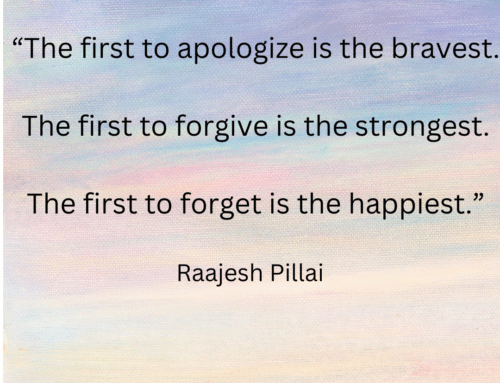
How easy is it for you to apologize to someone? We are all going to make mistakes or hurt someone’s feelings unintentionally. That goes without saying. Some people are able to acknowledge doing so, and offer a sincere apology fairly easily. However at other times when we have seriously insulted someone or been insensitive, it is not so easy.
Defensiveness
It is very easy to become defensive in these types of situations. Perhaps we make excuses, or remind the other person of the things they have done wrong to us in the past. It’s easier to put the blame on the other person than accept wrongdoing.
Becoming defensive when we have seriously hurt someone is anything but helpful. When we are in defensive mode we are unable to hear or listen to what the other person is saying as we are so busy building our own protective field. We look for inconsistencies in what the other person is saying and look for things that are not true, so we won’t feel the discomfort of the attack.
Be Empathetic with apology
In order to truly apologize and take responsibility, we need to listen to the other person and understand how we have hurt them. If not, we are unable to apologize in a way that makes the person believe that we are truly sorry. The hurt person needs to know that we understand what we have done, or not done that is wrong. Empathy for their pain or anger needs to be expressed. It’s also important for the other person to know that we feel bad or are experiencing some kind of pain for what we have done to offend them. We need to ensure that we will not hurt them again in the same way moving forward.
This can be much easier said than done. It is not a simple task to hear how we have hurt another person, and to know that we are the source of that pain.
Intact sense of self-worth
In order to really listen and be empathetic, our self-worth needs to be intact. This means you can recognize that you are human and make mistakes, and also know that it is just a part of whom we are. As a human being you are constantly changing and evolving and you can vow to do better in the future.
If you have a fragile ego or don’t feel decent about whom you are, then you may not be able to acknowledge that you have deeply hurt someone else. Doing so may prove to you that you are worthless. In reality, we all have worth no matter what type of pain or indiscretions we have committed.
It is easy to deny that we have done anything wrong, and justify our actions. This denial is just defensiveness, which is huge when we are feeling shame. We deny as a way to protect our sense of worth.
It may take some work to learn to offer a heartfelt apology, but it is doable. Learning to do so may be the only way to save your relationship.
What to avoid
When you do make the apology, it is important that you avoid the word ‘but.’ This will negate everything you said before the word ‘but.’ Also do not say, “I’m sorry if I hurt you.” Taking responsibility means you would say, “I’m sorry I hurt you.”
Forgiveness
After you have offered your sincere apology, you can then ask for forgiveness. Just because you ask for it, doesn’t mean you will get it. This just extends the olive branch to further repair the relationship. If they don’t take it, the ball is in their court and perhaps they will forgive you at a later date. Or you may need to ask again in the future depending on how much the relationship means to you. In addition, you can take things one step further and let them know what changes you will make as a result of the hurt you have caused. You can even ask the other person what they need from you in order to move forward.
Based on the indiscretion, the person may never forgive you, and you may need to let the relationship go. As painful as this may be on your part, you can vow to do better in future relationships. Learning from our mistakes is also part of being human. The lessons that hurt us the most are more likely to lead to behavior change.
If you need help in this area, please give me a call at 713-304-6554 and we can work on repairing your relationship.
Take care,
Debbie