Social Dilemma
If you have not yet seen the Netflix documentary The Social Dilemma, I highly recommend you do so. It is very eye opening on the effects of social media on our everyday lives and society. It certainly helps us to understand why we have become increasingly polarized and unhappy. This blog is a summary of The Social Dilemma.
This documentary was made by leaders and producers of programs on social media. Social media was designed for good. For example, the Facebook Like button was designed to add positivity. Over time the goal became to keep you on social media as long as possible, and engaged. This also became true of texting. They added the 3 little dots to let you know someone was responding. That way you’d stay on to hear their response.
With the algorithms setup, it keeps track of what you like and the things you scroll through. Based on where you spent your time, more things were sent that they thought you’d like. Thus, it has control of the information you receive.
Desire to connect
Being social creatures, we are wired to be social and connect to others. We are looking for social approval. This is constant. Over time, this can impact a kids sense of self worth and identity.
All these responses lead to a dopamine rush. It feels good and we want more. If people don’t get it they feel empty. People compare themselves to unrealistic standards of beauty, which make them feel bad about themselves. Going back to the Like button. No one could anticipate how you feel when you don’t get very many likes, or other friends get more Like responses than you.
An addiction
An interesting quote by Edward Tufte, “There are only two industries that call their customers users- illegal drugs and software.”
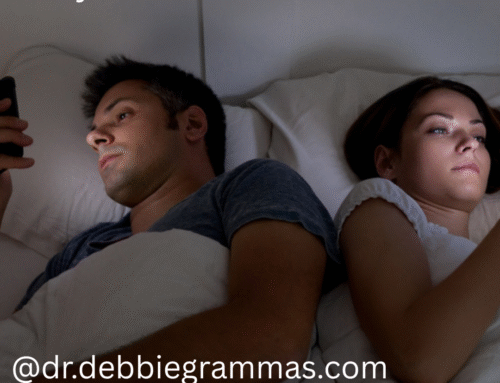
Think about it. Is looking at your phone the first thing you do in the morning and the last thing you do at night? If we are honest, most of us will say yes.
Even the people who know how the psychology of social media work are not able to stop using. Leaders saw they had children who needed and wanted their attention, yet couldn’t pull themselves away from their phone. If these leaders and innovators of the field know how the psychology works and still can’t pull themselves away from it, how do the rest of us even have a chance?
Negative impact of the social dilemma
Over time, social media also began to be used for unsavory purposes and have a negative impact.
Research shows that from 2011-13 there was an increase in depression among teenagers. The increase is 62% in older teens and 189% in preteens. Overall, suicide has shown an increase of over 70 percent since the beginning of the century. It has increased 151% in the preteen group in this same time period. This points to social media. Gen Z got on social media in middle school, and appear to suffer the most.
In addition, social media changes the way we think. We get different answers to the same question based on where we live. An example was given in the documentary. If you Google: climate change is… you will get different responses for different areas. These answers are not necessarily based on facts but where you are Googling from and what google knows about your interests.
Facebook controls your news feed. Thus, we all are operating on a different set of facts. We think we are being objective. Yet other people don’t see the same information you do. That’s why we are increasingly politically polarized. An example they gave was Pizzagate. If the algorithm detected you believe in or read about conspiracy theories they you would feed you the Pizzagate story.
Fake news
Research shows that Fake news from Twitter spreads six times quicker than true news. This changes how people think and how they behave. Social media sells ads and fake news brings in more money. Over time, it leads us to be unsure of what is true and what isn’t.
They state that Facebook is the perfect tool for a dictator to control their country. It can manipulate public opinion and crimes against humanity. The platform can spread misinformation easily. With algorithms we absorb lies as reality. The effect is is the destabilization of society. We only listen to news that supports our side vs. being open to others point of view. Thus, people are no longer interacting with each other.
Facebook and AI can’t know what is Fake News. If we don’t know what is really true, how can we solve any problems? This was brought to the US Senate Hearing in Persuasive Technology. These leaders shared with the senate that social media promotes chaos, decreases trust, increases loneliness, alienation and divisiveness.
The algorithms for predicting what will keep you on your screen is getting better and better. These leaders feel we can’t survive if things keep going the current way. It will lead to civil war, destroy civilization, and a lack of democracy. They see it as an existential crisis.
Business model
It’s a business model that makes a lot of money. According to the leaders in the field, the solution has to change the incentive. Remember, fake news brings in more money. The only way to change things is through regulation. Phone companies have laws to protect us. There are no rights for the users of social media, only companies. Therefore, if they don’t regulate social media there will be a lot of harm. The companies have the responsibility to change this business model.
Our attention is being mined. So we will look at what they want us to look at vs. focus on our own goals and values.
How to protect ourselves from the social dilemma
Some things we can do to help protect ourselves is to turn off all notifications, uninstall apps that waste our time, social media, and news apps. Never pick the video recommended to you on YouTube. Always choose the one you want.
Many in tech industries don’t give their kids devices to use social media or screen time.
Research shows it is best to have all devices out of the bedroom before bedtime.
They recommend no social media til high school.
Work out a time budget with kids for how long they can stay online.
Thus you can see, we are in quite a dilemma. I wonder how many parents and households would abide by the recommendations expressed in this documentary. It certainly opens the door for some interesting conversations.
If you have any concerns about the social dilemma or impact of social media, please give me a call at 713-304-6554.
Take care,
Debbie