The focus of this week’s blog is treatment for anxiety disorders. Since I wrote about several different types of anxiety disorder symptoms last week, I wanted to share various treatment options. Everyone is different so it’s important for your therapist to tailor a plan that suits you. I always tell clients that I am like Home Depot. I have a lot of tools to share with you. When you come into my office it’s like you are coming into the store with your toolbox. You won’t like all the tools you see. You may already have some of them, or you may not like some. That is fine. There are treatment options for you.
Some people come in and tell me they refuse to take any medication. That is totally your decision. It’s just one of many options. Others want to use as many of the tools and treatments they can get their hands on. Typically a combination of tools is optimal.
Treatment for anxiety disorders
Cognitive behavioral therapy
First, cognitive behavioral therapy looks at the way we think and how it makes us feel. If we continue to get stuck in negative thinking patterns (cognitive distortions) we will feel sad, lonely, angry, or depressed. Second we identify which cognitive distortions you tend to engage in. Third we teach you ways to combat your negative thinking. We want you to be more realistic, vs. stuck on worst-case scenarios. You can challenge your own thinking by asking yourself what is the worst that could happen. What are the chances that your worst-case scenario will occur?
This is the most researched type of therapy and tends to be the gold standard for treatment of anxiety disorders. I usually start with it and then decide with the client what to work on next.
Mindfulness
Mindfulness involves focusing on the here and now. First pay attention to this moment in time. What is happening? Second, focus on your 5 senses. What do you see, hear, smell, taste and touch?
A great place to practice this is in nature. Look at what is in front of you.
What do you see? Is it flowers, grass, sand, water, trees or something else?
Close your eyes and listen to the sounds. What do you hear? Do you hear birds, waves, wind, lawnmowers, or other people?
What are you touching? Are your toes on the ground? Can you feel the fabric of whatever you are sitting on? Maybe your arms or legs are crossed and you can feel that.
How about smell? Can you smell freshly cut grass? Saltwater? Suntan lotion? Maybe you smell people cooking food.
Finally what do you taste? Did you just finish some food, drink or gum?
Practicing mindfulness will help you slow down your mind. If you are truly focusing on the here and now, there is no room for future worry.
Relaxations tools
Breathing tools
When we slow down our breathing it helps relax us. Heart rate and breathing rate go together. So if you take long deep breaths in and out, it will slow down your heart rate. You can do a simple breathing meditation where you set a timer for 8 minutes, and just focus on the in and out cycle of your breath with no judgment.
Other common breathing meditations include 478 breathing and square breathing.
Progressive muscle relaxation
This simple tool focuses on tensing then relaxing different muscle groups. It helps you recognize the difference between the two. Start from your head and move down to your toes. You can find a script online, or follow a video. I also teach this in session.
Guided imagery
Guided imagery involves listening to someone walk you through an imaginary relaxing scene. My favorite one to teach is called Special Place. It has you focus on a place you have been before where you felt warm and safe. It asks specific questions that bring in your 5 senses. By doing so it helps you to feel as if you are in that same safe relaxing environment. Again you can find this on line.
Healthy lifestyle in treatment of anxiety disorders
Sleep
Sleep and anxiety are related. If you don’t get enough sleep you are more likely to struggle. It is important to establish a wind down routine. Perhaps you want to have a cup of decaf tea or warm glass of milk prior to brushing your teeth, etc.
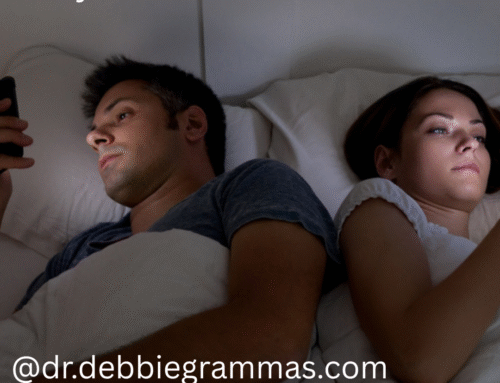
Practice effective sleep hygiene by keeping your bedroom cool. Don’t use a phone or laptop an hour before bed. The blue light can ramp you up. Reading a physical book or magazine can help. Most importantly, don’t keep your phone by the bedside. If you have trouble with sleep it’s too easy to look at the phone, and think you have been up a long time. Then you do mental math to see how much time you have left, which just increases anxiety. Keep it someplace you can’t reach. When your alarm rings, you can get out of bed to turn it off. It helps some people to keep a pad by their bedside to write down anything important that pops into your head at night. You can do this in the dark and decipher it in the morning.
Food/drink
Eating healthy foods and a more balanced diet will help your mental health. If all you eat is junk food, you will start to feel worse about yourself. This certainly doesn’t mean you have to skip all the things you like. Just eat them in moderation.
How much caffeine do you drink? Caffeine is a stimulant and will increase your anxiety if you are already struggling. Perhaps switch to half calf.
Alcohol
If you use this too much it will impact your sleep and mood. Again, enjoy in moderation. No one feels good when they have a hangover.
Medication in treatment for anxiety disorders
There are all sorts of medications that can help with anxiety. This is always an option if you are interested. Talk with your primary care physician or psychiatrist. Some times you have to try more than one to find the medication that works best for you.
Talk therapy
I always say, therapy is a safe place to land your storm. It often helps to talk to someone who is not emotionally involved in your situation, and is nonjudgmental. If I can help you with any type of treatment for anxiety disorders, please give me a call at 713-304-6554 and we will come up with a plan that is right for you.
Take care,
Debbie