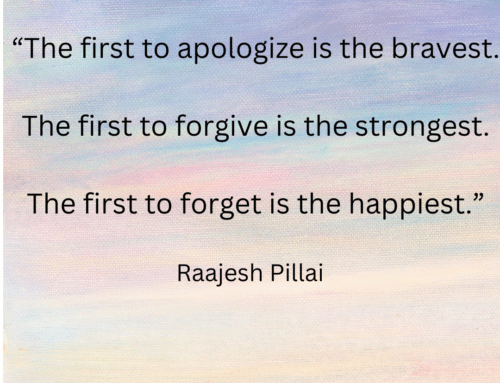
Do you struggle with forgiving someone for a wrongdoing? Perhaps you are holding a grudge or feeling resentment. If so, it is probably eating at you and taking up emotional energy. Maybe the person you need to forgive is yourself. Obviously this impacts your mood. Not only can it ruin your day, but it can also lead to other mental health issues such as anxiety, depression and anger.
Don’t beat yourself up about this. Forgiveness is a process and can take some time. Reading blogs like this or seeking outside help is the first step. Often time’s people feel better just knowing they are actively working on something and have a game plan.
I once heard someone say that resentment was like drinking battery acid and expecting the other person’s stomach to rot out. Forgiveness is something you do for yourself.
It is also important to note, that forgiving someone doesn’t mean that you forget or condone the wrongdoing. It helps to acknowledge your pain and let the other person know that what they did upset you. In the end, you are choosing to let go of the negative emotions that go along with holding on to the wrongdoing.
Benefits of forgiving
Improves relationships
Obviously if we are angry with someone or are holding a grudge, it will impact how we feel about the person as well as how we interact with someone. If we can try to understand their perspective or pain, perhaps we can begin to soften how we feel about the person. As a result, this gives space for emotions like warmth, compassion and connection to come through.
Decreases anxiety and stress
When you hold on to a grudge it takes up mental energy. This leaves you less energy to deal with other frustrations that come up in your day. It can leave you exhausted.
By learning to let go of these unpleasant feelings, you can decrease your level of stress and anxiety.
Forgiving increases your emotional well-being
When you let go of anger and resentment, you will feel more content. It gives more room for other positive emotions such as pleasure and happiness.
Improve your physical health
Research shows that forgiveness improves immune function, and decreases blood pressure and heart rate. Listen to your body next time you feel resentment or are upset with someone. It will impact your heart rate and blood pressure.
Promote healing
You may be in a very difficult situation. Perhaps you feel betrayed and your trust has been shattered. Allowing space for forgiveness is a step in the right direction for building trust.
Obviously this will take time. Once trust has been broken, it isn’t restored overnight.
Better self-esteem
It feels horrible to resent someone or hold on to a grudge! We don’t feel good about ourselves. If you are the person that you need to forgive, and you are able to do so, you will feel better about yourself. Your self-esteem and self-worth will improve.
Forgiving increases self-resilience
Forgiving can increases your ability to bounce back from adversity. This improves your emotional strength and well-being.
As you can see, there are many benefits to forgiving someone. It is a win-win. Your emotional, mental and physical health will improve and the other person will feel better too. In addition, your relationships will improve along with your self-esteem.
If the person you need to forgive is yourself, what can you do to work on this? Maybe you have learned from your mistake and this will help you move forward. If not, perhaps you can work on some self-compassion, just as you would for someone else. Remember, none of us are perfect. We all make mistakes.
On the other hand, if you can’t forgive the other person, or it is just too difficult to do, you may decide to end the relationship. That is OK too.
If you are having trouble forgiving someone and don’t know what else to do, therapy can help. Please give me a call at 713-304-6554.
Take care,
Debbie