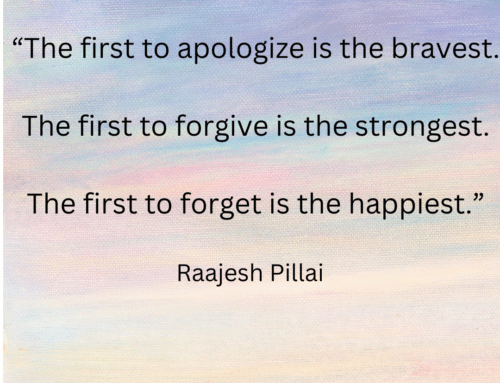
How do you repair your relationship after you and your partner have had a major fight? This blog will give you the tools to do so. Last week’s blog discussed how to resolve conflict. It would be nice if we all followed that model. However, we are all human and sometimes our emotions take over, even if we know all the conflict resolution skills. Also know that communication is the main reason people come in to couples counseling, so you are not alone.
Calm Down
The first thing you both need to do to repair your relationship is to take some time to calm down. It is impossible to resolve things when our emotions are flaring. Once the dust has settled and you are both ready to have a discussion you can move forward. The information below comes from John Gottman, PhD, who has made it his life’s work studying couples and conflict.
The goal here is for both of you to better understand each other. Remember, we each have our own subjective reality. Our reality comes from our past experiences and what the world has taught us. This is different for everyone. We want to listen to and understand our partner’s perspective. Do not try to prove that yours is the right one. You are both right.
Discuss feelings to repair your relationship
Secondly in order to repair your relationship you want to discuss and acknowledge your own feelings. What were you feeling? Did you feel afraid, tense, misunderstood, criticized, overwhelmed, powerless or unloved? Maybe you felt taken for granted, unappreciated or unattractive. These are only a few of them that may have come up for you. It very well may have been something else. Recognizing your own feelings and ability to describe them to someone else is an important step. Some people have trouble figuring out what the feeling is. You can go online and just Google, feeling words and see if something comes up for you.
Once you have identified your feeling, share it with your partner. Let him or her know what your subjective reality was, and what you were needing in the situation. As the partner it is important to be compassionate and curious toward the other person. Try to validate their feelings and perspective. Remember, you do not need to agree with it, but understand where your partner is coming from. Next, share your perspective and have your partner listen and validate yours.
Accept responsibility
The third step to repair your relationship is to accept responsibility. That is how you contributed to the argument. Remember, conflict doesn’t occur in a vacuum. You play a role in it somehow. If not, there wouldn’t be a conflict. Some examples might be that you have been irritable or have a high stress level. Maybe something happened earlier in the day that was upsetting. Perhaps you haven’t paid attention to your partner or been a good listener. It could be that you need some time alone or aren’t feeling good about yourself. You may be able to acknowledge that you have been preoccupied or not present emotionally. This may be a difficult step for some people who have difficulty saying they are sorry.
Share your triggers
The fourth step is to share your trigger. That is what led you to escalate in the conflict. These triggers most likely began early in life, in your childhood. Perhaps there were some times that you felt unheard or you didn’t have a voice. Maybe some of your needs were not met growing up. When situations occur as an adult that led to similar feelings from childhood, it can be a trigger. Some common triggers are feeling criticized, trapped, disrespected, vulnerable, lonely, unloved, powerless or blamed. Of course there are many more.
Learning to understand your triggers and those of your partner can help to de escalate conflict. If you partner can understand why a certain situation is a trigger for you, he or she can learn to avoid those triggers. As a result, future conflict may be avoided, or less intense.
What can you do better next time to repair your relationship?
Finally, in order to repair your relationship, ask yourself how you can make it better next time. What can you or your partner do differently if you get into a similar struggle moving forward? Ask your partner how you can improve the situation moving forward.
If you can have an open, honest discussion like this and be vulnerable with your partner, you will greatly increase the emotional intimacy in your relationship. In addition, if you can validate your partner’s vulnerability, and be sure to protect it, you will also increase intimacy in your relationship.
If resolving conflict is something you struggle with, please give me a call at 713-304-6554 and we can work to improve your communication.
Take care,
Debbie