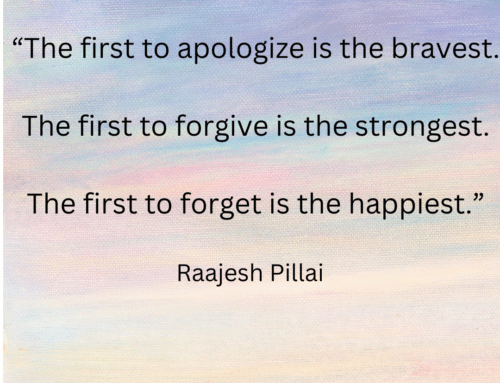
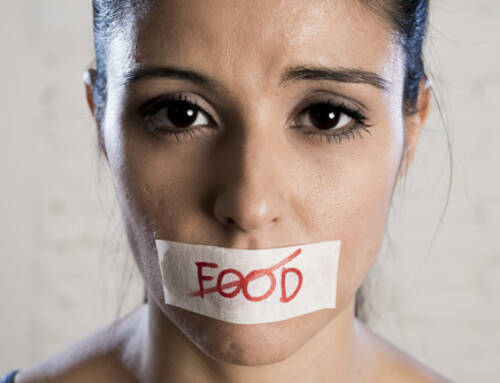
There are many red flags when it comes to abusive relationships. However, many people ignore or minimize these signs. I truly believe that if people would listen to Maya Angelous quote their lives would less chaotic and they’d be happier. As a therapist I have seen clients share numerous stories of abuse. Some of them believe the abuse was the one off situation, or that he or she didn’t mean to do it. On the flip side others think that they deserved the abuse.
No one deserves to be hit or called names. Yes, even just name-calling is verbal abuse. I have had clients go to a shelter and set boundaries with their abuser. I have also seen them dissolve those boundaries in a short period of time. They go back to their abuser, which is hard to understand.
The abusive cycle
The cycle of abuse typically goes something like this: the abuse occurs. Then there is the honeymoon phase where the abuser apologizes and says it will never happen again. Things are fine for a while. The person who has been abused has hope that the abuser will change, and it won’t happen again. But of course they don’t change. The person becomes abusive again and the cycle continues.
If only the victim would believe that it isn’t the last time, and that they didn’t cause or deserve the abuse.
Signs you are in an abusive relationship
Maybe you aren’t sure if your relationship is abusive or not. Here are a few signs. Often times these people push for quick involvement. They are so in love with you that they want to get married right away. In the beginning they might want to spend all their time with you and get upset if you spend it with other friends or family. This is how the abuser starts to isolate you. Other signs of abuse are calling your names, withholding money from you, forcing you to do things you don’t want to do. They might be verbally or physically abusive. He or she won’t take responsibility for their actions. In abusive relationships, there is a power differential, and the abuser has the upper hand.
Abusive relationships happen over time
You might wonder how in the heck does this happen? There is a great story about a frog in a boiling pot of water that may help you understand. If you put a frog in a pot of water and put it on the stove, it will slowly start to boil and the frog will be cooked to death. On the flip side, if you boil a pot of water and throw a frog in it, it will jump out. This is how abuse works. It happens so slowly over time that you get cooked. If your partner showed you who they were from the start, you never would have gotten into a relationship with them.
I have told clients countless times, that abuse doesn’t change-unless the other person is willing to admit that they have a problem and want help. However, most abusers will tell you that you are the problem, not them. Or if they do go to therapy, it will go OK until the therapist points out something they are doing that is harmful to the relationship. At that point in time, he or she will stop coming to therapy.
Toxic family systems
Some people grow up in families that are toxic and abusive. They begin to think that this is normal and that all families live like this. Obviously we know that this is not true. Only until these people meet other families do they realize that there are healthier families out there. Unfortunately if you grew up in a toxic family system, this toxicity can follow you wherever you go. Most likely you will end up in a relationship that will in some way, shape or form, recreate your family of origin dynamics. The only way out of this cycle is by setting boundaries and getting help.
Boundaries
Boundaries are like well-greased wheels. We all know the dynamics-spoken or unspoken. People don’t like it when you set boundaries. Yet, setting boundaries is not to make other people happy, but to take care of your own mental well being. When you set new ones, those wheels become rusty and grinding. It’s very uncomfortable. Other people will act out, manipulate you, call you ungrateful and selfish, or try to make you feel guilty, as a way to go back to your old behavior. They liked it better that way. Now, what do you think happens if you set a boundary and then give in? You have taught the person that they just need to throw a fit to get their way. Don’t set boundaries that you are not willing to stick to.
Power differential
Abuse is all about a power differential. When you set boundaries, you are taking your power back. This might be one of the most difficult things you will ever do. It is hard and scary to set boundaries, because you don’t know how the other person will respond. However, if someone won’t respect your boundaries and your needs, do you really want them in your life? Anyone worth keeping in your circle will respect your boundaries.
If you fear for your safety, you may want to have another person around when you set these boundaries, or you may need to do it from afar. Part of getting your power back is learning how to set boundaries and following through.
If you think you might be in an abusive relationship, therapy can help. Give me a call at 713-304-6554 and we can work on boundaries. If you fear for your physical or emotional safety you can also call the National Domestic Violence Hotline 1-800-799-7233 or Houston Area Women’s Center 713-528-2121.
Take care,
Debbie