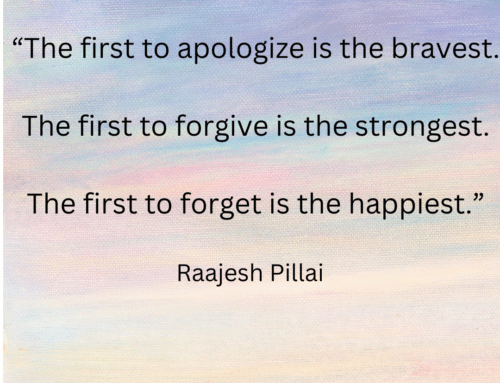
It is hard to ignore all that is going on with mental health in our community and world as we watch elite athletes struggle (Simone Biles, Naomi Osaka, Michael Phelps, Serena Williams to name a few). While most people feel empathy and compassion for these athletes, there are still some who push back and call them weak. This highlights the stigma of mental health.
I would argue that whether you are a professional athlete, public figure, or mere average person like the rest of us, it takes strength to admit that we are struggling. When you think about the definition of courage, it is doing something that you are afraid of. Many people would find it scary to share that they have mental health issues.
Sharing mental health struggles
You or I would only probably tell our closest friend or partner. Perhaps you would share it with some family members. But my guess is that you would only share it with people you trust. People, who would not make fun of you, humiliate you or use it against you. These public figures are sharing it with the world. Obviously as we can see, the world is not a safe place to open up and share these struggles. That seems pretty scary.
Self-care and boundaries
Another admirable quality of national or world figures sharing their struggle is that they are taking care of themselves. They know their minds and bodies, none of us do. How can you blame Simone Biles for wanting to protect her self? She knew she wasn’t in the best headspace to do what she needed to do. Why should she risk self-harm so we can see her win another gold medal? Good for her for respecting herself and her body. That is also the definition of having healthy boundaries. Remember boundaries are not there to make other people happy. They are there to protect yourself. Those people who are worth having in our lives will respect those boundaries. The others can think what they’d like.
By sharing their mental health struggles, these elite people are helping to decrease the stigma. If these gifted people who seem to have everything going for them are buckling under pressure, it says something. We all have our breaking point and these people have tremendous pressure on them. Most people I know couldn’t’ take the pressure of being in the limelight like that.
Better understanding mental health
How many people need to struggle before society can understand that it is not about pulling up your bootstraps, sucking it up or just moving on? I can’t tell you how many people I have worked with whose family members don’t think depression or anxiety exist. Unsympathetic people will just say, “Just don’t think about it.” If it were that easy, no one would be struggling with mental health issues. I’ve worked with people with anorexia whose families will tell them to just eat. Or the person with alcoholism or substance use, just don’t do it.
Better understanding and education is important. We cannot judge someone else unless we know what it is like to be in his or her shoes. Realistically this is impossible, for even if you suffer from anxiety or depression, your experience can be very different from someone else’s. I will tell you though; if you have these kinds of struggles you will be more compassionate to someone else with struggles.
Lets think about it. Do you know anyone who doesn’t struggle in some way, shape or form with life? Are all your relationships, friendships and work life, perfect? I don’t know anyone’s whose it. Life is difficult and we all struggle at some point in life.
Sharing your struggles
Many people think that something has to be seriously wrong with you to seek out therapy. Nothing could be further from the truth. It often helps to talk to someone who is not emotionally involved in the situation. When you talk to friends and family, they typically tell you what you want to hear vs. what you need to hear.
Another interesting fact is that if you share your struggles with someone else, my guess is that they will share something they struggle with too. When we do that, even though it might be a little scary, we feel less alone. Loneliness only exacerbates mental health issues. Thus, just by sharing we are moving in the right direction towards our own mental health.
Also consider the research and how many people are on medication for mental health issues. It could very well be that someone in your family is taking some type of medication that you don’t even know about.
Research also shows that having therapy along with medication is the best path forward. You don’t have to be on medication to get better either. Therapy in itself is effective and many people would prefer not to take any medication.
The main take away here is to please show compassion for those who struggle. Trust me, at some point in time you are going to be that person who needs compassion for your own struggles.
If I can help you out, please give me a call at 713-304-6554.
Take care,
Debbie