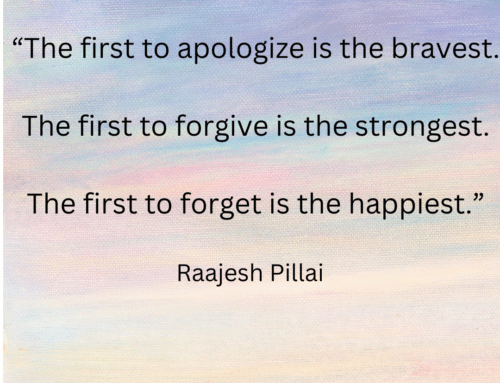
How do you resolve conflict? Most of us learn how to do so from our parents. However they are not always the best role models.
Many of us have trouble recognizing the other person’s point of view, when we are upset with something. However, true conflict resolution acknowledges that there are 2 points of view, both of which are valid.
Recognizing what is truly behind the conflict is the issue. Many couples fight about insignificant things. When that occurs on a regular basis it is indicative of a deeper issue.
Here are some ways that people address conflict that is unhealthy.
- Triangulation. This occurs when you have conflict with someone and you talk to another person about the issue. What this does is to reduce your stress as you are sharing your worries with someone else. Yet does nothing to improve the situation.
- Do you share your frustration with someone who will tell you what you want to hear? He or she will take your side. Doing so can lead the other person (who you are angry with) to feel ganged up upon.
- Passive Aggressive Behavior. When you don’t address what is going on with the person you are upset with, and instead engage aggressively towards the other person, it is passive-aggressive. You may do or say things to get back at the other person. The other person has no idea why you are mad at them. You are the one who will suffer more.
- If the other person asks you what is wrong you say, “Nothing.” Your partner knows when you are mad based on the tone of your voice or behavior. Saying nothing is wrong will only eat at you.
Healthy ways to address conflict
- Address the person directly. Let him or her know how you are feeling and what you are upset about.
- Acknowledge your vulnerability or fear. This may take a little time to figure out. It is said that when someone overreacts that it is 10%-20% of what is going on in the moment and 80%-90% of what has occurred in the past. If the other person calls you out on something that is true, but you don’t like about yourself, admit it. Even if you have to say something along the lines of, “I hate to admit this, but you are right.”
- Take a time out. Perhaps you are someone who needs a little time to process things. When you are in conflict it’s hard to think straight. Some people even have some sort of hand signal to determine they need a little time.
- Set up a time weekly where you and your partner can discuss things. Be open about what is bothering you, whether it has to do with that person or what you are concerned about for the week.
- Talk with someone who can take an outsiders perspective and will give you honest feedback. This is someone who will tell you what you need to hear vs. what you want to hear. If you don’t have a person in your life like this, then a therapist is another option.
Call me if I can help out in any way 713-304-6554.
Take care,
Debbie Grammas PhD